
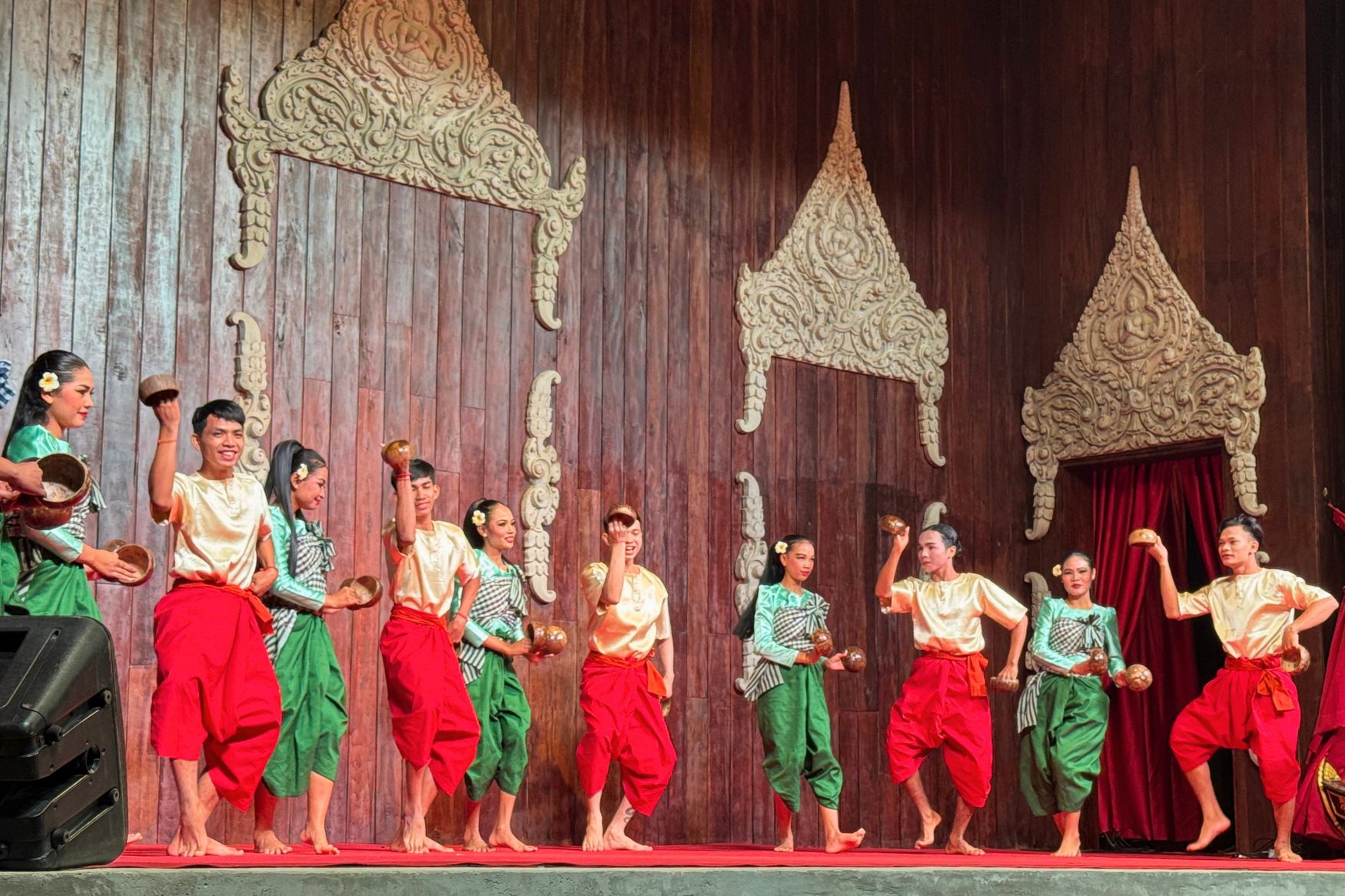
When dusk settles over Siem Reap, the temple town exchanges its golden sunset glow for an entirely different kind of magic. While most travelers naturally flock to see the serene, delicate gestures of classical Apsara dancers, there is a livelier, joyful side to Cambodian cultural performance that deserves a spot on your evening itinerary: Robam Kuos Tralaok, the traditional Coconut Shell Dance.
The Beat of Rural Life Brought to Life
Unlike the slow, sacred court dances reserved for ancient kings, Khmer folk dances celebrate the warmth, romance, and daily banter of countryside life. Originating in the Romeas Hek district of Svay Rieng province, the Coconut Shell Dance was created around the 1960s as a playful ritual. After long hours harvesting rice under the tropical sun, villagers gathered in the evenings to unwind, socialize, and spark lighthearted flirtation.
Holding polished coconut shells in both hands, male and female performers wear vibrant silk changkbin—traditional folded trousers—and strike the shells together in fast, crisp synchronization. The percussive clack-clack-clack echoes in harmony with the upbeat melodies of a traditional Mahori orchestra, creating a infectious beat that instantly energizes the entire room.
Cultural Insight: In Khmer mythology and agrarian folklore, coconut shells symbolize unity, youth, and fertility. The playful back-and-forth gestures between male and female dancers mimic natural countryside courtship, making it one of the most upbeat traditional performances in Southeast Asia.
What to Expect at a Siem Reap Cultural Evening Show
If you are looking for things to do in Siem Reap at night beyond Pub Street, booking a cultural dinner show is one of the most immersive ways to spend your evening.
Most evening dance showcases present a balanced menu of Cambodian performing arts, typically spanning 1 to 2 hours:
Welcome & Blessing Dances: Gentle, ceremonial openings to bring good fortune to guests.
Lively Folk Performances: High-energy acts like the Fishing Dance (Robam Nesat) and the Coconut Shell Dance (Robam Kuos Tralaok).
Classical Apsara Dance: The iconic, slow-moving grand finale featuring elaborate gold headdresses.
As you watch the performers glide and leap across the stage, venues typically serve authentic Cambodian set dinners or buffets featuring local classics like fragrant Fish Amok, beef Lok Lak, fresh papaya salad, and sticky rice desserts.
Essential Travel Tips for Visitors
Best Venues: You can catch authentic coconut dance performances at heritage theaters like Apsara Theatre near Wat Bo Road, Morokot Restaurant, Angkor Village, or hotel cultural terraces across Siem Reap.
Show Timing: Shows usually start around 7:00 PM or 7:30 PM, with dinner served roughly 30 minutes beforehand.
Reservations: Advance booking is highly recommended during peak season (November to March) to secure table seating near the stage.
Photo Opportunities: Most venues invite audience members onstage after the final curtain for photos with the troupe in full costume.
Listening to the rhythmic clattering of coconut shells while sipping local fresh juice or rice wine offers an unforgettable glimpse into Cambodia’s resilient spirit and rich folk heritage.