
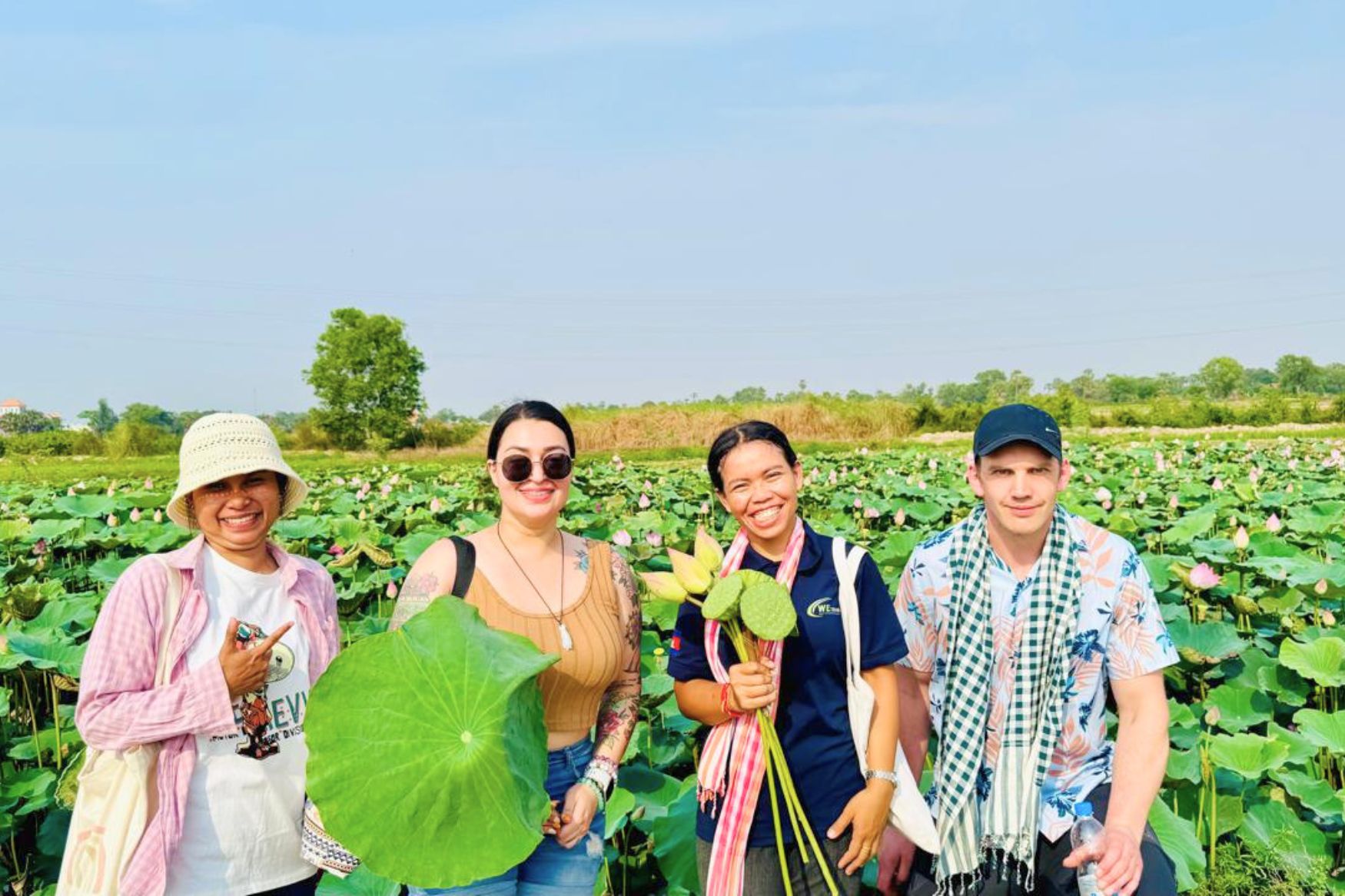
There’s a side to Siem Reap that most travelers miss when they’re rushing between Angkor Wat and the night markets. Just a short tuk-tuk ride past the city limits, concrete gives way to vast, emerald fields dotted with vivid pink and white blossoms stretching toward the horizon.
Visiting a lotus farm and wading into the field to pick fresh flowers with local farmers is easily one of the most serene, authentic experiences you can have in Cambodia. Here is what the journey feels like, why the lotus holds such deep cultural meaning, and everything you need to know to plan your own lotus picking trip.
Standing in the Mud: The Lotus Field Experience
The morning air in the countryside is cool and smells faintly of damp earth and sweet blossom. Arriving at the lotus fields just after sunrise, the landscape is wrapped in soft golden light. The fields look like endless green carpets raised above shallow waters, anchored by giant circular leaves and vibrant pink buds swaying in the breeze.
Stepping into the field—or boarding a small wooden paddle boat to navigate the deeper waterways—is an immediate sensory shift. Local farmers guide you through the process: choosing the firmest buds, snapping the spiky stems cleanly at just the right spot, and gathering fresh lotus pods to snack on as you go.
It’s tactile and slow-paced. Unlike typical tourist stops, there’s no rush here. The rhythmic splashing of water, the quiet rustle of large leaves, and the genuine smiles of local farmers make you feel instantly connected to everyday Cambodian rural life.
More Than Just a Flower: The Sacred Lotus in Local Culture
In Cambodian culture, the lotus isn’t just scenic flora—it’s deeply sacred and zero-waste:
-
Spiritual Offerings: Freshly folded lotus buds are the primary gift brought to Buddhist pagodas and ancestral shrines as symbols of purity and rebirth.
-
Culinary Staple: Raw lotus seeds tucked inside green showerhead-like pods taste crisp and sweet, similar to fresh hazelnuts. The root (rhizome) goes into savory soups, while stems are used in refreshing crisp salads (Plea Sroek Bua).
-
Eco-Textiles: Specialized craft centers near Phnom Krom transform lotus stem fibers into luxurious, eco-friendly silk-like fabric used for high-end sustainable clothing at Lotus Silk Farm Siem Reap.
There’s a side to Siem Reap that most travelers miss when they’re rushing between Angkor Wat and the night markets. Just a short tuk-tuk ride past the city limits, concrete gives way to vast, emerald fields dotted with vivid pink and white blossoms stretching toward the horizon.
Visiting a lotus farm and wading into the field to pick fresh flowers with local farmers is easily one of the most serene, authentic experiences you can have in Cambodia. Here is what the journey feels like, why the lotus holds such deep cultural meaning, and everything you need to know to plan your own lotus picking trip.
The Sacred Meaning of the Lotus in Khmer Buddhism
To understand the lotus in Cambodia, you have to look at the murky water beneath it. In Khmer Theravada Buddhism, the lotus is the ultimate symbol of spiritual enlightenment and human potential.
The plant begins its life at the bottom of dark, muddy ponds, slowly reaching upward through dirty water until it breaks the surface to bloom into a flawless, spotless flower. Cambodian Buddhists view this journey as a metaphor for the human condition: no matter how much suffering or attachment (samsara) surrounds you, the human spirit has the capacity to rise above worldly troubles and achieve spiritual purity (nirvana).
he Art of the Sacred Offering
Walk into any Cambodian pagoda (wat), and you’ll immediately see lotus flowers lining the altars before images of the Buddha. But they are rarely offered just as they were picked in the field.
Local devotees practice a traditional art form of gently folding back each individual petal to expose the golden heart of the bud. This physical act of folding the petals symbolizes opening one’s heart and mind to the teachings of the Buddha.
-
Buds in Bud: Unopened lotus buds represent potential—the quiet promise of spiritual wisdom waiting to blossom.
-
Petal Colors: White lotus blossoms symbolize supreme spiritual purity, while pink lotuses are closely associated with the historical Buddha himself.
-
Daily Merit-Making: Offering a freshly folded lotus alongside burning incense and candles is one of the most common daily acts of making merit (bun) for Cambodians seeking peace, good health, and ancestor blessings.
When you hold a freshly picked stem in the fields of Siem Reap, you aren’t just holding a agricultural crop—you’re holding the sacred heart of Cambodian spiritual devotion.