
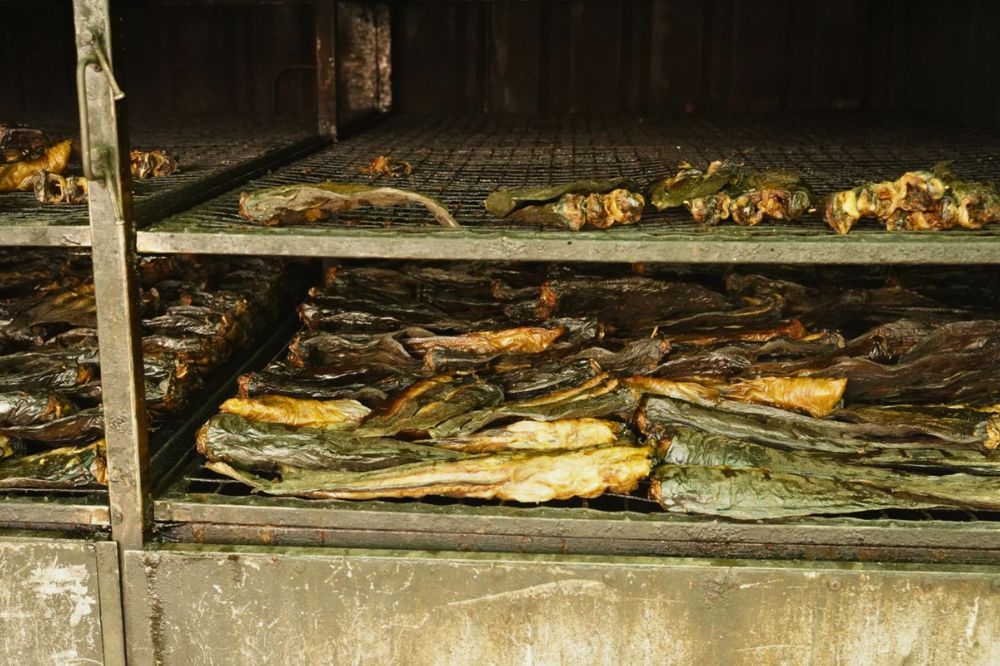
If you spend any time traveling through rural Cambodia—especially around the vast waters of the Tonle Sap Lake—you’ll smell it before you see it. It’s a rich, deep, woodsy aroma hanging in the warm afternoon air. Follow the trail of blue-gray smoke drifted across stilted wooden homes, and you’ll find families hard at work practicing one of the country’s most crucial culinary traditions: smoking fish.
Known locally as Trei Chho’e (ត្រីឆ្អើរ), smoked fish is more than just a tasty ingredient. It is a brilliant ancient survival technique born from the unique rhythms of the Mekong River and Tonle Sap ecosystem.
Why Smoking Fish Built Cambodian Cuisine
During the annual monsoon season, the Tonle Sap Lake swells to over five times its dry-season size, creating one of the most productive freshwater fisheries on Earth. For a few months, local fisherfolk catch tons of small-to-medium freshwater fish like sheatfish, snakehead, and river catfish.
Before modern refrigeration, keeping tons of fresh fish from spoiling in tropical heat required ingenuity. While fermented fish paste (prahok) and sun-dried salted fish (trei ngeat) take care of heavy preservation, smoking creates a distinct, long-lasting staple that stores safely for months in woven baskets.
The Traditional Step-by-Step Smoking Process
Making authentic Trei Chho’e isn’t a quick barbecue—it’s an exercise in patience and precise heat control.
Fish are fresh-caught from rivers or floating villages, scaled, and thoroughly gutted. Small fish are kept whole, while larger varieties are butterflied flat so smoke penetrates evenly.
The fish are lightly salted to draw out surface moisture and inhibit bacteria growth. Workers then thread multiple fish firmly onto long, sharp bamboo skewers (chho’e), arranging them side-by-side like fan blades.
Skewers are laid across multi-tiered wooden or bamboo racks built directly over a low brick pit. Hardwoods, rice husks, or dried coconut shells are ignited below, generating thick, aromatic smoke with minimal open flame.
For 12 to 24 hours, the fish dehydrate slowly under gentle heat (around 50°C–70°C). Artisans flip the skewers repeatedly so the flesh turns deep golden-amber without burning.
How Trei Chho’e Powers Cambodian Kitchens
Open any traditional Cambodian pantry, and you’ll find a ring of smoked fish ready to go. The cured flesh becomes intensely concentrated, earthy, and umami-rich.
Local cooks flake the dried meat directly into fiery Green Papaya Salads (Bok Lahoung), simmer it inside fragrant coconut curries, or boil it down with seasonal river weeds and green mango to make comforting daily soups (Samlor Kakou or Samlor Machu).