
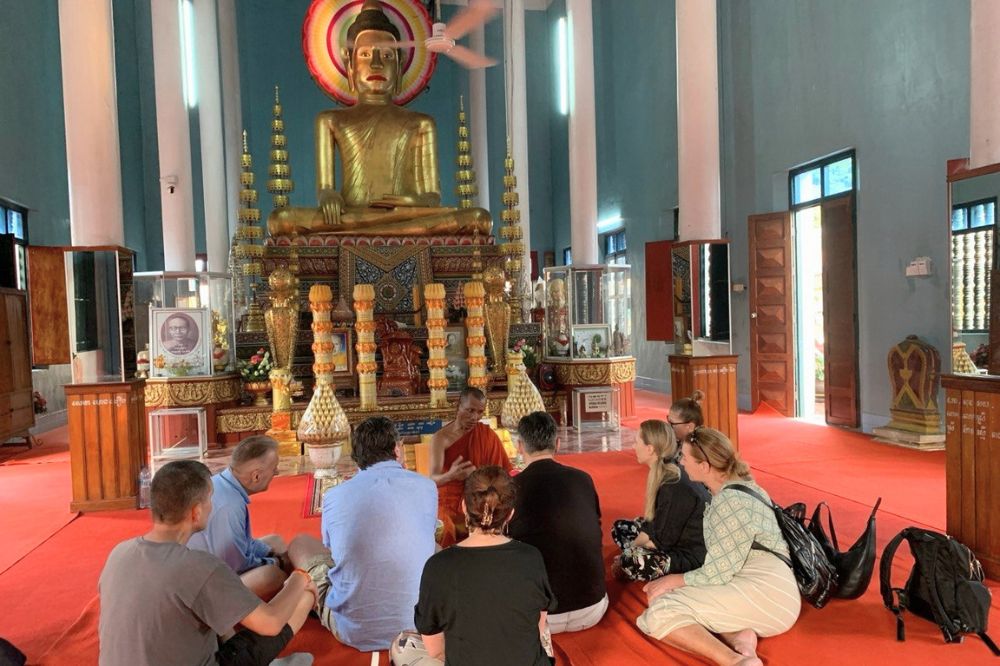
A quiet morning stroll through the streets of Siem Reap or along the riverside in Phnom Penh just as dawn breaks, you will witness one of Southeast Asia’s most serene daily traditions. A line of monks clad in vibrant saffron robes walks silently in single file, holding brass alms bowls. Local villagers step out from their homes, kneeling or standing barefoot, to quietly offer scoops of warm rice, fruit, or fresh lotus flowers.
In Cambodia, monk Buddhism (the Sangha) is not just an ancient religious order tucked away in isolated monasteries. Monks are the living, breathing conscience of the nation. Over 95% of Cambodians follow Theravada Buddhism, and at the center of this spiritual universe stand the monks—serving as spiritual guides, community leaders, educators, and protectors of Khmer heritage.
To understand Cambodia’s past, present, and future, you have to understand the profound role its Buddhist monks play in everyday society.
1. The Monastic Order (Sangha): The Ultimate Spiritual Field of Merit
In Theravada Buddhism, the monastic community—known as the Sangha—holds an elevated position. Monks are seen as living representatives of the Buddha’s teachings (Dhamma). They live by 227 strict monastic rules (Vinaya), committing their lives to simplicity, meditation, study, and ethical purity.
For lay Cambodians, monks represent what is known as a “Field of Merit” (Srek Bon).
How Merit Works in Daily Life: When a family gives food, robes, or financial support to a monk, they aren’t just performing a act of charity; they are planting seeds of spiritual merit (bun). This merit is believed to bring peace, protection, and prosperity to their current life while ensuring a favorable rebirth in the next.
This spiritual dynamic creates a deep, reciprocal bond between the people and the pagodas (wats). The lay community nourishes the monks physically with food and shelter, while the monks nourish the community spiritually through blessings, chants, and moral guidance.
2. Monks as Community Pillars and Social Safety Nets
Historically, before modern schools, hospitals, and social services existed across Cambodia, the local pagoda was the center of everything—and the monks were its caretakers. Even today, especially in rural provinces, monks carry out essential social roles that go far beyond religious rituals.
Free Education and Youth Housing
For generations, pagodas have served as the ultimate equalizer for underprivileged families. Thousands of young boys from low-income rural villages move to urban pagodas to live as Sramon (novice monks) or pagoda boys.
The monks provide them with:
-
Safe shelter and daily meals
-
Moral grounding and character discipline
-
Access to public schooling, universities, and foreign language classes
Many of Cambodia’s top scholars, government officials, businessmen, and teachers started their journeys as young monks living in a local wat.
Community Mediation
When family arguments, land disagreements, or neighborhood disputes arise in Cambodian villages, people rarely rush to lawyers or police stations first. Instead, they visit the head monk (Chao Athikar) of their local pagoda. Respected for their neutrality and compassion, monks offer gentle counsel based on Buddhist ethics, resolving conflicts peacefully before they escalate.
3. Temporary Ordination: A Sacred Rite of Passage
One of the most unique aspects of Cambodian monkhood is that ordination does not have to be a lifelong commitment. In fact, short-term ordination is a cherished tradition for young men across the country.
Known as Thwer Preah (becoming a monk), young men in their late teens or early twenties often enter the monastery for anywhere from a few weeks to several months.
Why do young men become monks temporarily?
-
Paying Back Parents (Gron): Entering the monkhood is considered the highest spiritual gift a son can give to his parents—especially his mother. The merit generated during his time in robes is dedicated directly to them.
-
Cultivating Discipline: Monastic life teaches young men emotional control, mindfulness, respect, and deep focus before they enter adulthood, marriage, and career life.
-
Mourning Loved Ones: It is common for family members to be ordained for a short period following the death of a parent or grandparent to dedicate merit to the deceased’s soul.
4. Rebuilding the Spirit: Monks and Post-War Healing
You cannot talk about Cambodian Buddhism without acknowledging its incredible resilience. During the tragic Khmer Rouge regime (1975–1979), the regime attempted to eradicate religion entirely. Thousands of historic pagodas were destroyed or converted into warehouses, and an estimated 25,000 to 50,000 monks lost their lives. By 1979, the monastic order in Cambodia was nearly wiped out.
Yet, as Cambodia began its long journey of recovery in the 1980s and 1990s, one of the first things local communities did was rebuild their pagodas and re-ordain surviving elders.
Monks played a pivotal role in healing the national psyche:
-
Psychological Comfort: Monks offered water blessings (Srod Nam), chanting, and spiritual counseling to millions suffering from trauma and loss.
-
National Reconciliation: Figures like the late Maha Ghosananda—often called the “Gandhi of Cambodia”—led peaceful marches (Dhammayietra) across war-torn regions of the country, spreading messages of non-violence, forgiveness, and unity.
The revival of monkhood was essential to rebuilding the emotional and moral fabric of modern Cambodia.
5. Monks in Modern Cambodia: Environmental and Civil Activism
Today’s Cambodian monks are not just guardians of ancient traditions; they are active participants in solving modern challenges.
A prime example is the Independent Monk Network for Social Justice and environmental organizations like the Tree Ordination Movement. Monks march into threatened forests like Prey Lang, chanting prayers and wrapping sacred saffron robes around ancient trees. In Khmer culture, harming a tree dressed in a monk’s robe is seen as a severe moral sin, successfully deterring illegal loggers and preserving Cambodia’s rich biodiversity.
6. Etiquette for Visitors: How to Show Respect to Monks
If you are traveling in Cambodia, encountering monks will be a highlight of your cultural journey. Showing proper respect ensures a meaningful and harmonious interaction.
| Do’s | Don’ts |
|
|
|
|
|
|
Conclusion: The Saffron Thread of Khmer Identity
From early morning alms rounds to major festivals like Pchum Ben and Khmer New Year, monks represent the beating moral heart of Cambodia. They bridge the gap between the ancient wisdom of the Angkorian era and the dynamic energy of modern life.
In a rapidly developing nation, the calm, saffron-robed presence of Cambodia’s monks reminds everyone—locals and travelers alike—of the timeless values of compassion, generosity, and peace.